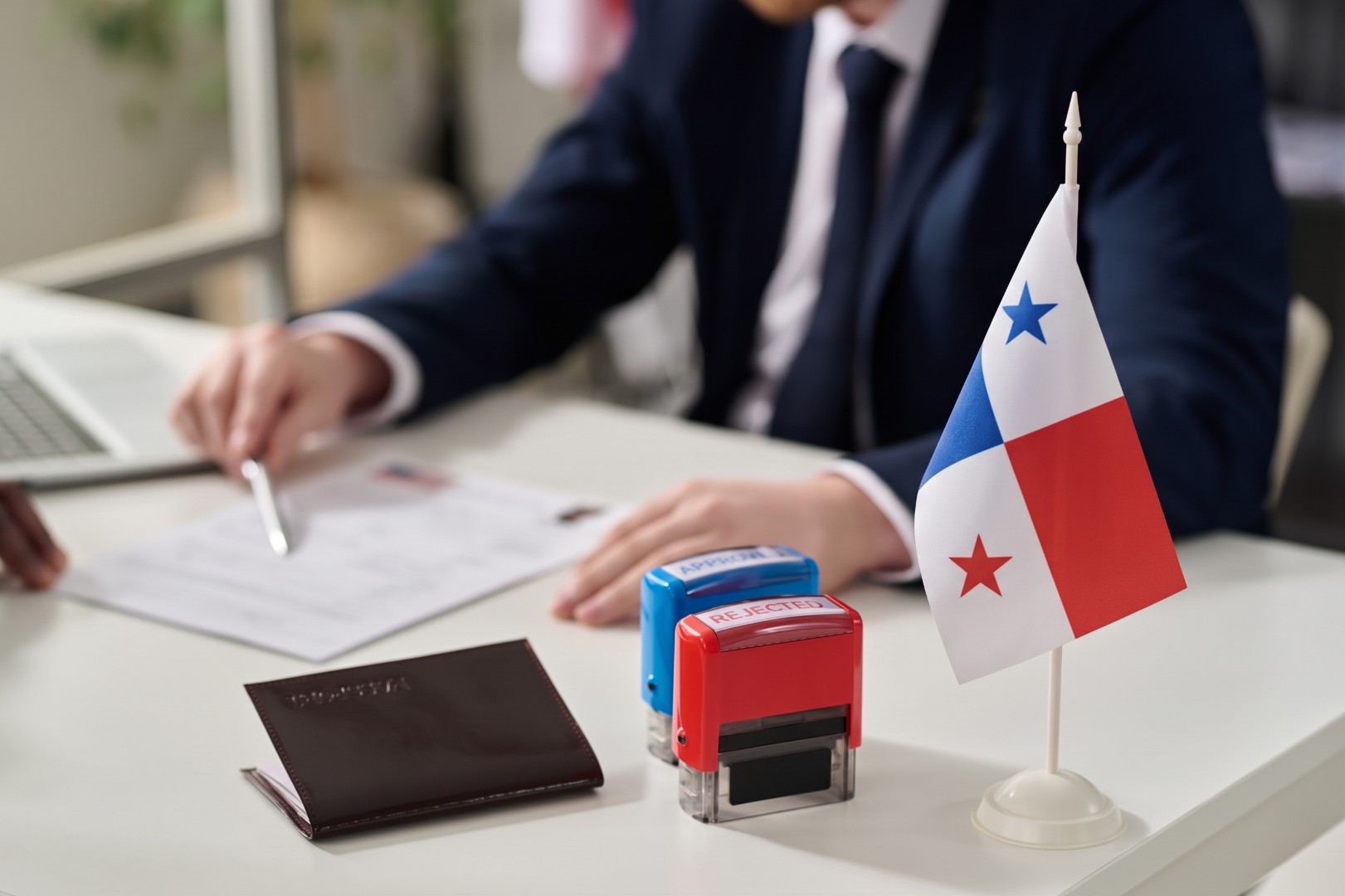



More and more buyers touring properties in Panama end up asking the same question half way through the visit: “does this purchase also work for residency?” Most of the time, yes – and that’s one of the reasons why Panama’s real estate market has attracted so much attention from foreign buyers in the past few years.
The Qualified Investor Visa is an immigration category in Panama that provides permanent residency for an investment that can be made directly in real estate. This is not a marketing add-on or a seasonal promotion. It is a formal immigration category, governed by executive decree and is designed specifically to bring foreign capital into the country through various avenues, including real estate.
That means buying real estate in Panama under the right conditions is not just a wealth diversification decision. And it can be at the same time the step which activates your residency application.
The current real estate route threshold is $300,000 in a property without liens, using funds that must originate from outside the country. The figure is not arbitrary or permanent, it is set by Executive Decree 193 of 2024 and the regulation itself establishes an adjustment that would raise the threshold to $500,000 as of October 15, 2026.
That has a direct practical implication for anyone weighing when to buy. A property that qualifies today at $300,000 could cost an extra $200,000 if you wait past that date. Be sure to confirm with an immigration lawyer the current status of this threshold before you make your purchase decision based on this number – this figure has changed more than once over the last few years.
Unlike other immigration categories in Panama which require a two-year provisional residency period before permanent status is granted, the Qualified Investor Visa grants permanent residency directly upon approval – no intermediate stage. A government review typically is resolved within 30 to 90 days after a full file is submitted.
That speed is precisely what lures so many buyers to this route over others: It’s not only about buying an asset in a dollarized economy with a territorial tax regime, it’s about solving, within a workable window, an immigration goal that may take years elsewhere.
Not all purchases will automatically qualify. The property could be free of liens, and if some of the purchase price is financed, the difference over the qualifying threshold can be covered through a mortgage with a local bank – but the amount used for qualification must be shown to come from foreign funds, properly documented. In recent years Panamanian banks have significantly strengthened their source of funds verification, so arriving with your financial documentation in order upfront saves real time in the process.
In addition, there are government fees of approximately $10,000 for the primary applicant, fees for a licensed Panamanian immigration attorney – required by law to file any application – typically from $8,000 to $15,000, and less expensive costs for apostilles, certified translations and the necessary medical exam. This is a budget you want to understand specifically before you commit to a specific closing date.
When the property is in your name and the funds have been properly documented, the next step is to file the immigration application with the National Migration Service through your attorney. Your residency will remain valid as long as you keep your investment for a minimum of five years. You don’t have to live in Panama, but you must visit the country at least once every two years.
This is also when many buyers choose to work with companies that specialize specifically in residency by investment, such as [GLP Panama Residency](https://glppanamaresidency.com), which handles the immigration side of the process once the real estate purchase is already underway — coordinating documentation, banking compliance, and filing with Migration in parallel with the property transaction.
If you are interested in a property at least partly for the possibility of residency, it is worth resolving a few questions with professional help in advance: whether the price and structure of the purchase are truly within the current threshold, whether the funds you plan to use meet the foreign-origin requirements and what documentation you will need to legalize depending on your country of origin. None of these checks should be done after you sign, they are worth so much more before you sign.
There are other ways to qualify for the Qualified Investor Visa, including securities and a fixed-term bank deposit, at $500,000 and $750,000 respectively, but real estate is by far the most popular choice. Why? Because it is the only option where the qualifying amount is a tangible, usable asset, not just capital sitting in an account for five years. Buyers already planning to spend meaningful time in Panama, whether at a beach property, a highland retreat or a home base near the capital, generally find that the real estate route gives them the best of both worlds — a place to actually use and an investment that satisfies the residency requirement at the same time.
If you are looking at the Qualified Investor Visa to purchase property in Panama, the fundamentals of a good real estate investment have not changed – location, quality of construction and potential for appreciation are still the first considerations. The difference is that if you make a good choice and set up the purchase properly, that same investment can be used to address an immigration goal at the same time that would otherwise require a whole different process.
This article is for informational purposes and is based upon public regulation in effect as of September 2026. This is not a substitute for individual legal, tax or immigration advice – please confirm current amounts, timelines and requirements with a licensed Panamanian immigration attorney before making any investment decision.
Déjanos tus datos y recibe más información.